

Timberrrr!
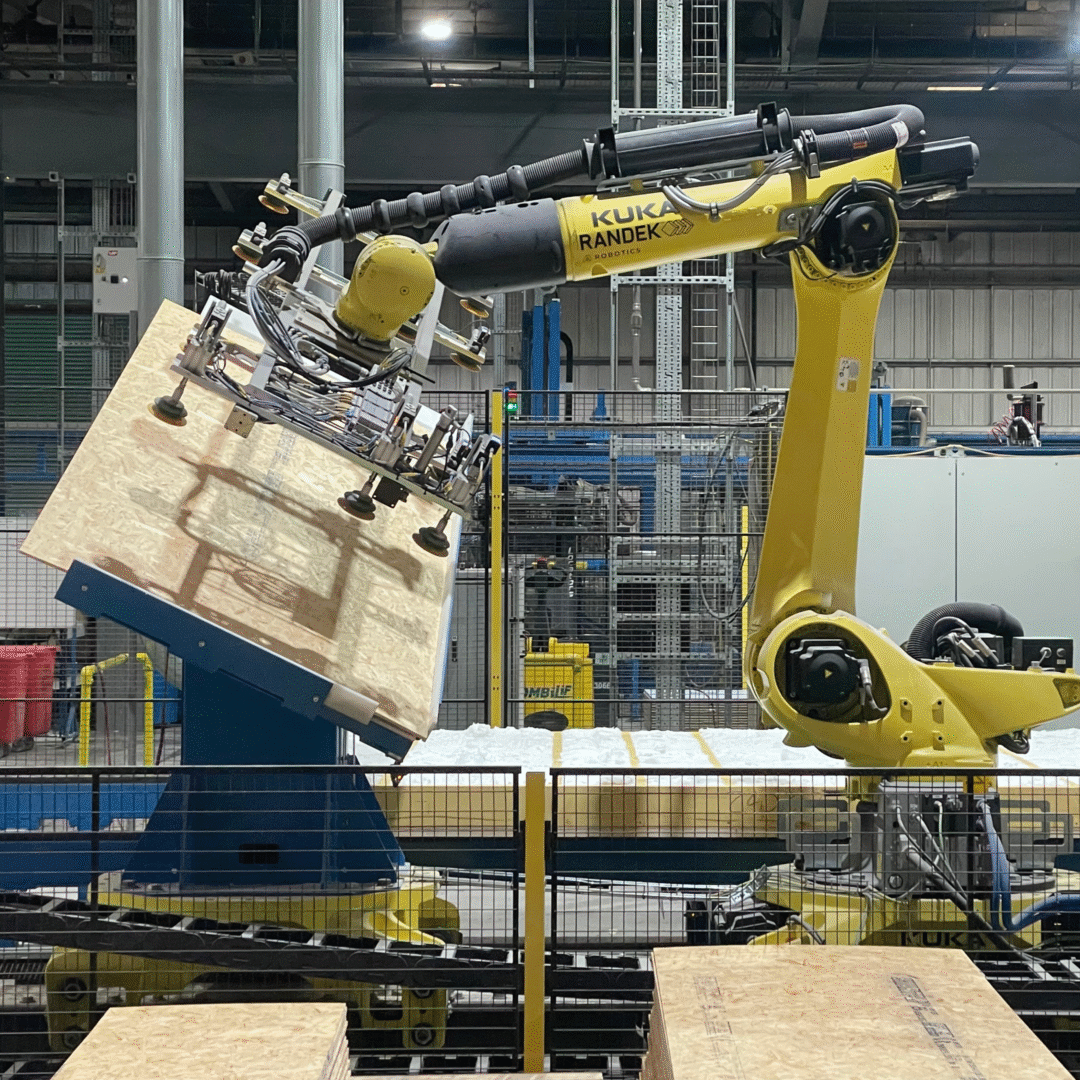
I was recently lucky to visit a timber construction factory as part of a roundtable discussion on the use of the material. Watching the robots assemble the panels and fill them with insulation was hypnotic however there remains a resistance to timber frame construction in the housing sector.
In recent times there has been a disconnect between the housing sector and the timber frame evangelists. The former is thinking ‘fire safety’ and the latter ‘net zero.’ There have been some notable timber framed fire buildings, including Richmond House, Sutton in 2019, Beechmere retirement complex in Crewe also 2019 and a residential block in Deptford in 2022.
My housing association, Elim, is currently emptying a timber frame building for demolition. The problem is not necessarily the form or the design (although there are issues) but mainly the poor quality of carpentry and the construction of the building. This issue is pointed out in detail in an article for Inside Housing by Pete Apps, one of the chroniclers of the Grenfell disaster, “Timber-frame buildings and cavity fires: the burning question” published in 2022. His interviews point out the crucial role of fire barriers within buildings which need to be installed correctly during construction to make the buildings fire safe.
Fire is not the only barrier to timber frame scaling up to meet the Government’s housing targets. Colleagues in other associations report issues such as overheating, noise transmission, damp, and mould. These are all issues which need addressing, not just in timber frame construction but in all construction types.
The previous Conservative Government developed with the industry a “Timber in construction roadmap” which included ambitious plans to see more homes built using timber and timber frame stating, “With England’s low rates of building with timber relative to other countries, there is an opportunity to unlock this industry at scale and at speed.” It compared 9% of buildings being timber framed in England with 92% in Scotland.
The Labour Government have yet to commit themselves to the roadmap or to replace it. They have made commitments to building eco homes and energy efficiency housing which will be difficult to achieve without using timber as the main construction material.
The timber lobby also believes that without factory built wooden houses the Government will not be able to meet its building targets. Andrew Orriss of the Structural Timber Association says, “That the off-site timber construction sector could help to deliver about a third of the government’s target of 300,000 new homes per year”. MHCLG and Homes England retain commitments to MMC (despite the large number of failures including the collapses of L&G, Top Hat, Ilke Homes and others) although without the rhetoric of previous programmes. Interestingly, this summer Homes England put out a tender for research into the experience of people now living in factory built housing.
It appears that the Government will need to mobilise modern methods of construction to overcome skills shortages, rising material costs and the speed of construction as well as meeting its carbon targets. The challenge for the Timber sector is to gear up to build at the pace and volume required and to ensure that the homes they produce are safe and comfortable to live in.