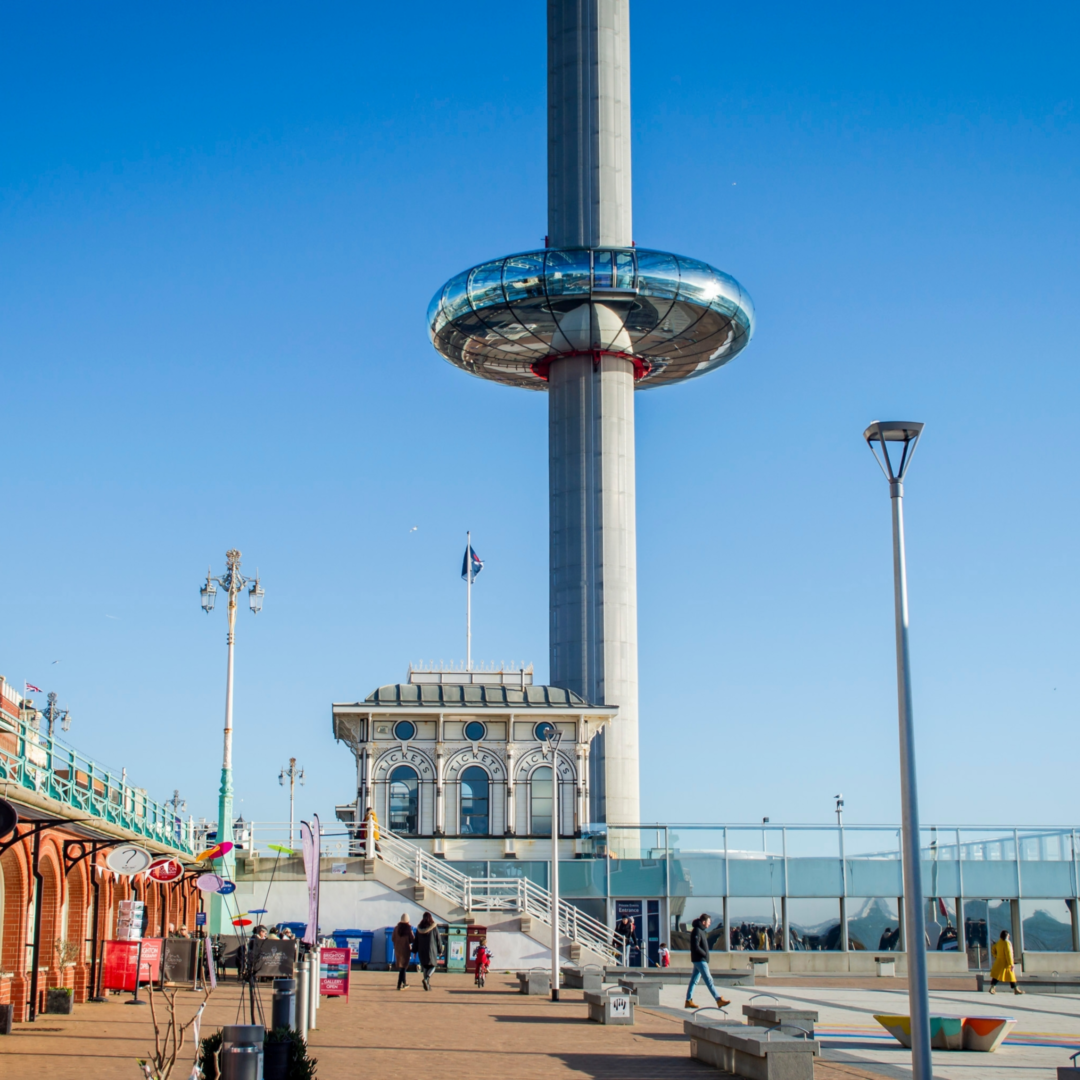

‘Brighton Council Faces £51m Loss After i360 Tower Fails’
This was a headline that made my heart sink, yet again. This is not the first time a local authority has been lured into making what I would call a “brave” investment. It may shock you when I say that it shouldn’t be the last “brave” investment made.
Council leaders are always looking for something new and fresh to attract visitors to their town or city. Yet they often fail to engage with businesspeople who live and thrive in the sectors they seek to invest in. There is a world of difference between those who run a business and those who are professional consultants.
The i360 was the brainchild of the designers of the London Eye, which I think we all would agree has become iconic. British Airways agreed to sponsor it, but Brighton was asked to plug the gap in the capital costs. The business case was based on an annual attendance of 800,000, and that single assumption rendered the entire business plan flawed.
Why is that you might ask? Simply put, the attraction is a doughnut-shaped disc that elevates itself up a shiny pole. It has a fixed capacity governed by the size of the platform; the time it takes to rise, view and return; viable operating hours; and days through the year.
800,000 attendances per annum works out to 2192 daily attendees. With a capacity of 200, this means 11 fully loaded flights per day. If the shortest flight is 25 mins, and loading was no more than 5 mins for a total duration of 30 mins, operating from 10am to 10pm daily, you could max out at 24 flights a day, for a total capacity for 4800. Thus, the i360 would need to operate at 45% capacity to deliver the promised attendance.
Well, that doesn’t sound so bad, but you must remember that all tourist attractions experience fluctuating visitor numbers over the seasons. At peak times, you’d likely have queues and lost visitors. Outside out of school holidays and in the depths of winter, operating hours would likely be shorter. Simply put, no attraction operates at 100% capacity. The London Eye, one of the most popular tourist attractions in the world, operates at just 57% capacity, lower than one might expect. And that is long before we get into discounts and pricing!
It must also be mentioned that outside London, very few attractions reach the 800,000 attendance mark. There is Beamish (815,000) in the North-East, Longleat (790,000), Portsmouth Dockyard (770,000) and the Eden Centre in Cornwall (679,000). However, all these locations provide a longer visitor experience than the i360 with its 30-minute turnaround.
The level of attendance the i360 achieved in practice was, in my opinion, very creditable at 270,000. A future operator, who is free of the capital investment costs, could keep the attraction in business, assuming incoming revenue can cover operating maintenance and health and safety costs
The fact that Brighton and Hove City Council invested and lost £51m, including a later loan, is shocking, and sadly, this outcome was fully predictable. Bournemouth lost £10million taking over the IMAX theatre on the site of the former Pier Approach Baths on the seafront. The new building became the most disliked in Dorset, was dogged by delays, and failed to achieve desired attendance numbers. After 5 years delay it opened in 2002, closed in 2005 and was demolished by the council on 9th April 2013, just over 13 years ago.
At the time, I was running the Pepsi London IMAX, which was the third most successful venue in the world with 330,000 attendances, behind New York and Berlin, and just ahead of Munich and Washington DC.
During the delayed opening, I was asked by Bournemouth Council if I could help them. They had been told by the developer that IMAX had not built the projector. With one phone call, I found that the IMAX projector had been built, shipped and sat in a bonded warehouse in Felixstowe, awaiting the developer to pay the £250,000 VAT now due before it could be released. This was the first sign that the project was in financial trouble.
I was asked about the potential attendance numbers the Bournemouth theatre could achieve. After working out tourist numbers and the local catchment area, I suggested between 70,000 and 100,000 annual admissions were possible. The Bournemouth IMAX never got above 70,000. This was again completely predictable: the business projections were flawed and this could have been avoided.
Portsmouth has fared better. It wanted a fresh, new visitor attraction that complemented the Naval Dockyards, drew visitors to the new shopping complex at Gunwharf Keys, and which also celebrated the Harbour and Portsmouth’s shipping heritage. From this, the Spinnaker was born. The £35 million in funding costs for the project were shared, with the Council contributing £11 million.
The project was driven by the Council administration of the day. They went to great lengths to find a commercial operator, with open days, helicopter flights to the height of the tower before it was built, open tenders and public meetings. I know this as I was one of the last two operators in the selection. The rigour was impressive, and officers had done their research. The design was almost complete, and they listened to operators’ suggestions on how to manage the attraction.
On a recent visit to the tower, it’s largely as promised: an amazing view on a clear day and insight into a working harbour and its history, making for a wonderful family and educational attraction. It’s very well run, and the visitor flow is as hoped, with one glaring exception: the much-heralded panoramic lift on the outside of the building is no longer operational and was dismantled in 2012.
The Spinnaker attracted 400,000 in its first year. After twenty years, the number of visitors has averaged 250,000 per annum. The financial figures are not in the public domain, with the funding derived from a mixture of Lottery funds and grants. I doubt the
Council will ever see a return on investment, but after maintenance costs, the attraction should continue to wash its face and give the operator a helpful management fee.
The upside for the City of Portsmouth is that it has an outstanding, award-winning visitor attraction that complements the Historic Dockyard and draws tourists to the shopping centre. I would imagine everyone from Portsmouth has been up the tower more than once with friends and visitors alike since it opened 20 years ago.
With the demise of retail, falling commercial investment and the additional pressure on hospitality and tourism due to increased taxation and higher costs, it has become harder to find anchor tenants or visitor attractions. Both of these are essential in terms of direct revenue and drawing visitors to key destinations, driving local economies.
I recently visited two seaside towns, both in need of investment and regeneration. Both trips were fascinating, with two councils determined to find ways to bring economic prosperity back. The answers are all place-based: there is no one solution, and there are opportunities to be brave.
Visitor attractions can be the “anchor” for regeneration. They have to work commercially, have access to wide catchment areas, and have capital funding that is either cheap or free. Big attractions can be secured if the political will is there from the politicians. There are still national museums that are only London-based. There are also attractions, like Abba Voyage, that would work wonderfully in one of our northern seaside towns or cities when its run in Newham ends.
The Government should look again at how it distributes Lottery funds, providing capital funding as the Millennium Commission did in its heyday, which would make a significant impact for creating anchors for our seaside resorts.
I would not want local governments to not invest or look at how they can encourage attractions into their towns and cities. However, local authorities need to draw upon experience from other cities, operators, and not get carried away. This statement is as true for when they are investing in new visitor attractions as it is for investing in any sector outside of their core area of expertise. Being brave and investing in your communities is the role of councils, while drawing on real-life knowledge and experience to inform your decisions is essential to success.