

“No One Reads Your Press Releases”: Hard Truths in Community Engagement
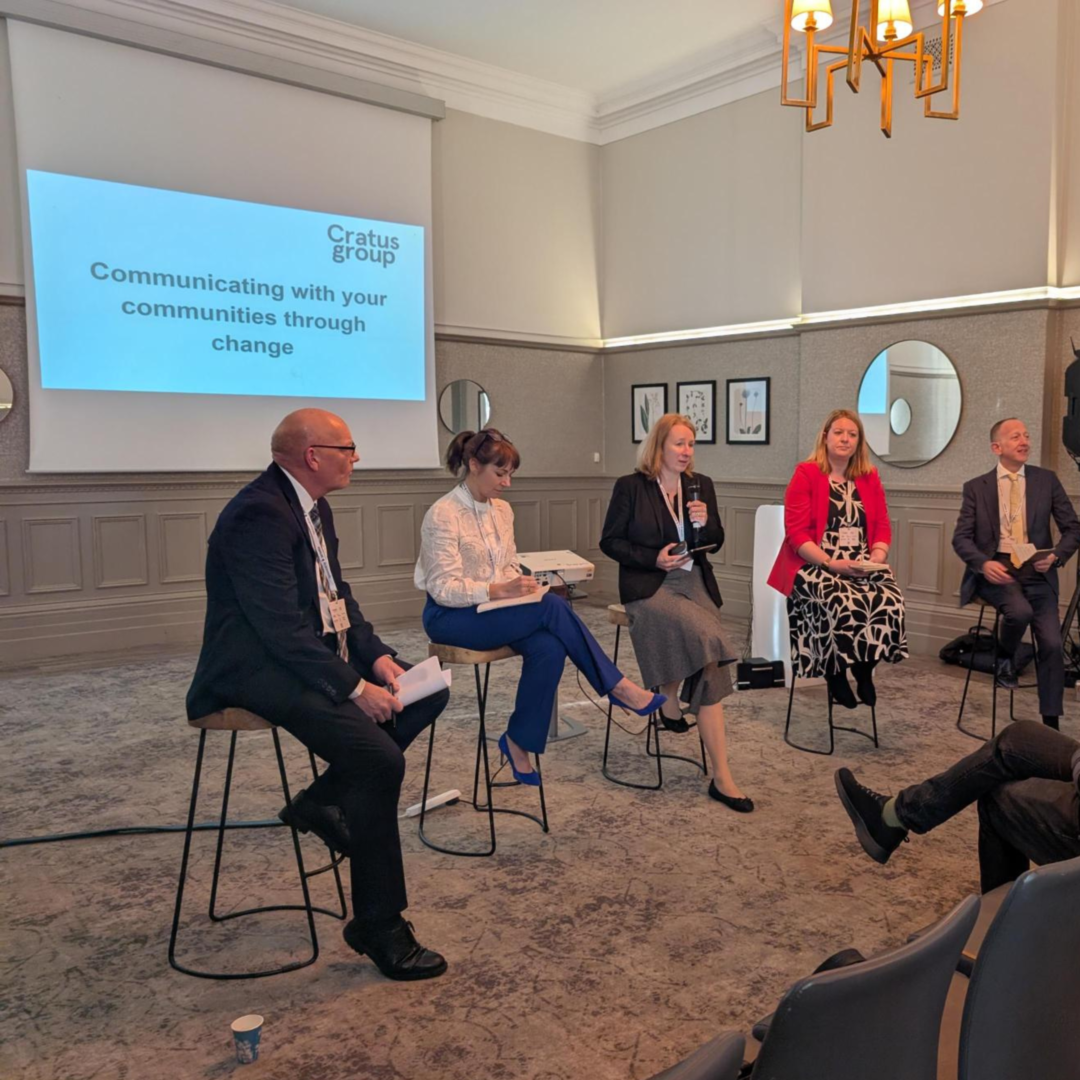
Last week, Cratus hosted an event at the District Local Councils Network which focused on a subject close to my heart, engaging communities. Chaired with great skill by our own Sarah McKee, Managing Director for Corporate Communications and Communities, our panel of Councillors and Council Officers set out the challenge of how to bring communities with you on a change journey and how to manage the distraction of complaints from the few while still being proactive to reach the many.
Local Councils know a little something about a “change journey”. From budget cuts, new crises every other day, and the elephant in the room of Local Government Reorganisation, navigating choppy waters is par for the course. But engaging residents in these issues is a challenge. Some don’t care, some don’t know, and others are just tired and angry that the sands keep shifting.
So, what were the key insights? John Richardson, Chief Executive of Harborough District Council, opened with a punchy “no one reads your press releases”. In today’s world, the press release you’ve spent a week getting signed off is far less important than the headline you run it under, and the very first comments that it generates. “People read the headline and then scroll to the comments. The middle is irrelevant”. Are officers lining up positive comments by promoting the piece to relevant stakeholders and encouraging engagement? Is the headline subject to the same scrutiny as the content? If not, you’re missing a trick.
He also put another challenge to the room: do you really need to be putting everything on social media? Are councils obligated to be entertainment and, more importantly, are they any good at it? John felt communications should be local and place-based, factual and useful, and as often as possible in hardcopy or face-to-face, rather than striving for “fun”. We were reminded that Parish Newsletters are sometimes a better option than a poorly viewed TikTok video lost in the noise.
Councillor Jeremy Newmark, Leader of Hertsmere Borough Council, disagreed. While he agreed that bad quality social media output can be “cringe” (as the kids say), he was clear that it’s where younger residents are and we need to meet them there. Just as engagement is better done in the communities, on doorsteps and at local events that are well attended already, being on social media is meeting residents where they are instead of expecting them to come to you.
He also felt that we must invest in our comms operation and treat it not as “the poor relation” but as “our fourth emergency service”, because councils can’t afford not to reach their constituents. Budgets are tight, and comms officers are fewer and further between than they once were, but “if you get internal communications right, every council officer is part of your communications resource”. Amen.
Councillor Lisa Spivey, Leader of Gloucestershire County Council, was quick to remind us that people are under enormous stress and pressure in today’s Britain. The cost-of-living crisis hasn’t gone away, and it’s been a slow squeeze on people’s purses and their bandwidth for years now. The global picture is increasingly worrying and residents are feeling that anxiety every day.
That’s why Lisa favours purposeful communications that are honest about what residents need to know and what they can influence, and once again meet people where they are. She urged us not to forget about Ward Councillors, who know their communities better than anyone, and to utilise members at all levels, including the Parish, to reach people when something is important.
The group agreed that the system isn’t always helpful. Planning decisions, for example, are policy-bound and subject to national intervention, so not “truly” local. Lisa’s patch is subject to tough housing numbers set centrally that sometimes feel like forcing the council to “pave over paradise to build a car park”. She urged councils to just be honest about these constraints and treat residents like adults.
Councillor Sophie Cox, Leader of Worthing Borough Council, agreed. She explained how “purposeful” sessions with stakeholders and community members in Worthing focused on what LGR meant for them. By convening panels and focusing on what can be influenced rather than broad concepts, residents were able to have a real impact on proposals. Honesty was the key to keeping these constructive, and this process has helped the council to identify interested community members that they can engage with in future.
We finished with a look ahead to the new challenges around the corner. The group noted a growing number of AI-generated complaints overwhelming officers, and the ever-present challenge of stopping Councillors from fixating on Facebook comments and losing sight of the mass of residents who aren’t engaging online but still need to be heard.
For all the challenges, I was struck by the commitment in the room from officers and councillors of all political stripes and backgrounds to the project of local democracy and keeping communities at the heart of what we do. Whatever LGR brings, there are committed people in councils up and down the country who want to do right by their residents.