

Labour Party Conference 2026: the vibes are back
This year I attended my fifth Labour Party Conference and it was, by far, the most upbeat and jubilant. There was a real sense that Labour was back, and taking control of the left narrative that it had struggled with under Keir Starmer.
There was a lot of discussion about what the ‘vibes’ were like – which seems to have become one of the key measures of how well a party conference goes and, indeed, how well a Government is performing. And I can conclude that the ‘vibes’ were good.
Andy Burnham’s ruthless Cabinet reshuffle has re-energised the party, as has the political nature of his speech. After years of Labour trying to prove that it could be sensible, responsible and fiscally disciplined, there was something quite refreshing about a leader standing up and saying: this is what we believe in.
Andy has reminded the party that they are here to play politics and deliver policies that align with left Labour values. More on Andy’s speech later.
Devolution was one of the biggest themes running through the conference. Mayors featured heavily, and there was a lot of discussion about moving power out of Westminster and into the regions. There was also plenty of chatter about what this will mean in practice, particularly with the Budget looming.
The Budget was hanging over almost every conversation. There is a huge amount of speculation about what will actually be announced, particularly around local government funding, devolution and the economy.
The political timetable makes this even more interesting. For some of the new mayoral elections to be brought forward to May 2027 (previously delayed… confusing I know), the announcements need to be made before the Budget so that they can be reflected in the wider funding and devolution arrangements. That uncertainty is also reflected in the messaging to business.
The communications from the party are undoubtedly better. There is a much clearer political direction and a stronger sense of what Labour is trying to achieve. But I sat through panels with ministers where the ambition was clear, while the detail was often still missing.
And businesses need the detail.
It is very difficult to plan investment, jobs and growth when you know what the Government wants to achieve but not quite how it intends to get there. There was plenty at conference about growth, investment and supporting businesses, but there is still a gap between the political message and the practical detail businesses need to feel confident.
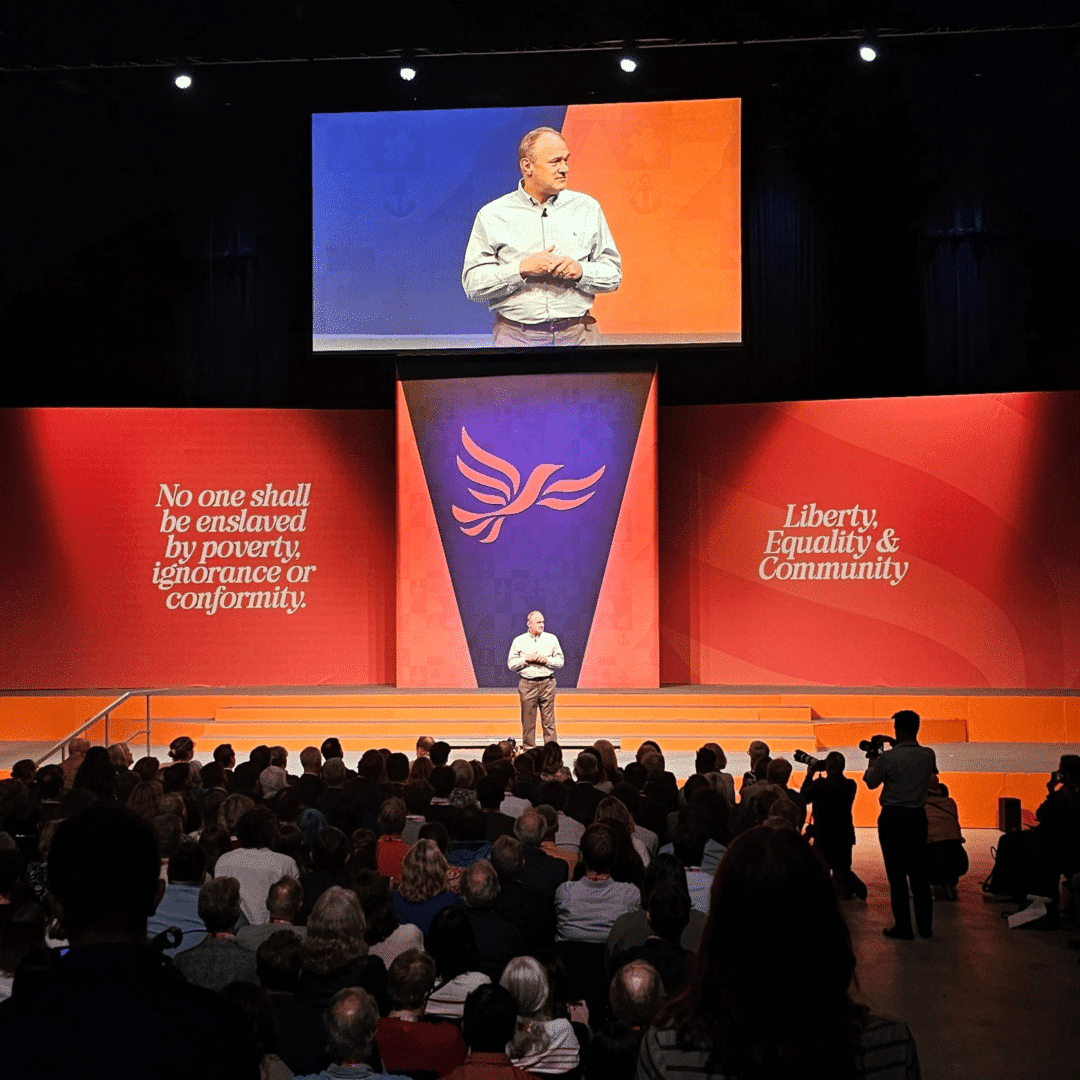
Then came Andy’s speech.
It was one of the most political Labour conference speeches we have seen in a very long time. Not because it was full of attacks on the opposition, but because it was unapologetically ideological. Andy stood up and talked about deindustrialisation, deregulation, privatisation, austerity and Brexit, and openly argued that Britain needed to take a different path. You could feel the difference. This was a Labour leader talking about what Labour is for, rather than simply what Labour can afford to do.
There was also a clear attempt to reclaim the argument on the left. The Greens have been increasingly successful at presenting themselves as the more progressive alternative, while Reform has been making serious inroads into traditional Labour territory. That leaves Labour with a slightly awkward balancing act, which if Andy can get right, may well be an extraordinary political feat.
Reform is the main competition in much of the North, while the Greens are increasingly competitive in parts of the South. So how do you announce policies that appeal to both groups of voters without making either feel that Labour has abandoned them?
There were some announcements aimed squarely at younger people too, including the new Your First Home scheme. The intention is welcome: helping first-time buyers who are struggling to save a deposit. But I did find myself wondering whether helping young people buy homes by helping them borrow aka take on more debt is really the solution Labour should be pedalling. Instead, I feel they should look at other solutions and fund a reduction in young peoples existing debt (student loans).
The issue is not simply that young people cannot get a mortgage. It is that homes are expensive, rents are expensive and wages have not kept pace with either. A new loan can help someone through the front door, but it does not necessarily make that front door affordable.
Student loans are another area where the pressure is building. Andy acknowledged that young people are working, paying bills and trying to save while looking at student loans “which never gets any smaller”. But despite that growing pressure, there was no major announcement on student loans at conference. Possibly this it to be saved for the budget (my fingers are crossed!) even after reaching the milestone of paying my first £24 off the capital amount since I started my contributions almost 10 years ago.
The triple lock is another policy that will have very different reactions depending on where you sit. We knew this day would come eventually. Andy has proposed changing the state pension triple lock from 2030, with the savings intended to help fund a National Care Service.
This will undoubtedly be welcomed by some younger voters who have questioned whether the current system is sustainable. But for Labour voters who are approaching retirement, or who have already retired, it could feel very different. This is the difficult part of politics. Every policy has a constituency. Every constituency has a different idea of what fairness looks like.
Perhaps the bravest part of Andy’s speech was his approach to Brexit. He was remarkably blunt, saying that leaving the EU had been a mistake and was not working for the country. This is something a lot of Labour MPs have been quietly saying in the background for some time, but Starmer was unwilling to address it head on. Andy has now put it firmly back on the agenda. It is bold, but it will divide the party.
For Labour, Brexit is one of those issues where there is no particularly neat compromise. Trying to take back voters from Reform while simultaneously reopening the question of Britain’s relationship with Europe is going to require some very careful politics.
But perhaps that is the biggest difference between this Labour Government and the one we saw before it. There is a willingness to have the argument. Whether you agree with the policy or not, conference felt like a party that had remembered that politics is about making choices, setting a direction and giving people something to believe in.
The question now is whether the Government can turn the good vibes into good government. Because conference speeches are easy. Budgets are harder.
And the real test will be whether all that political energy turns into policies that actually change people’s lives for the better.