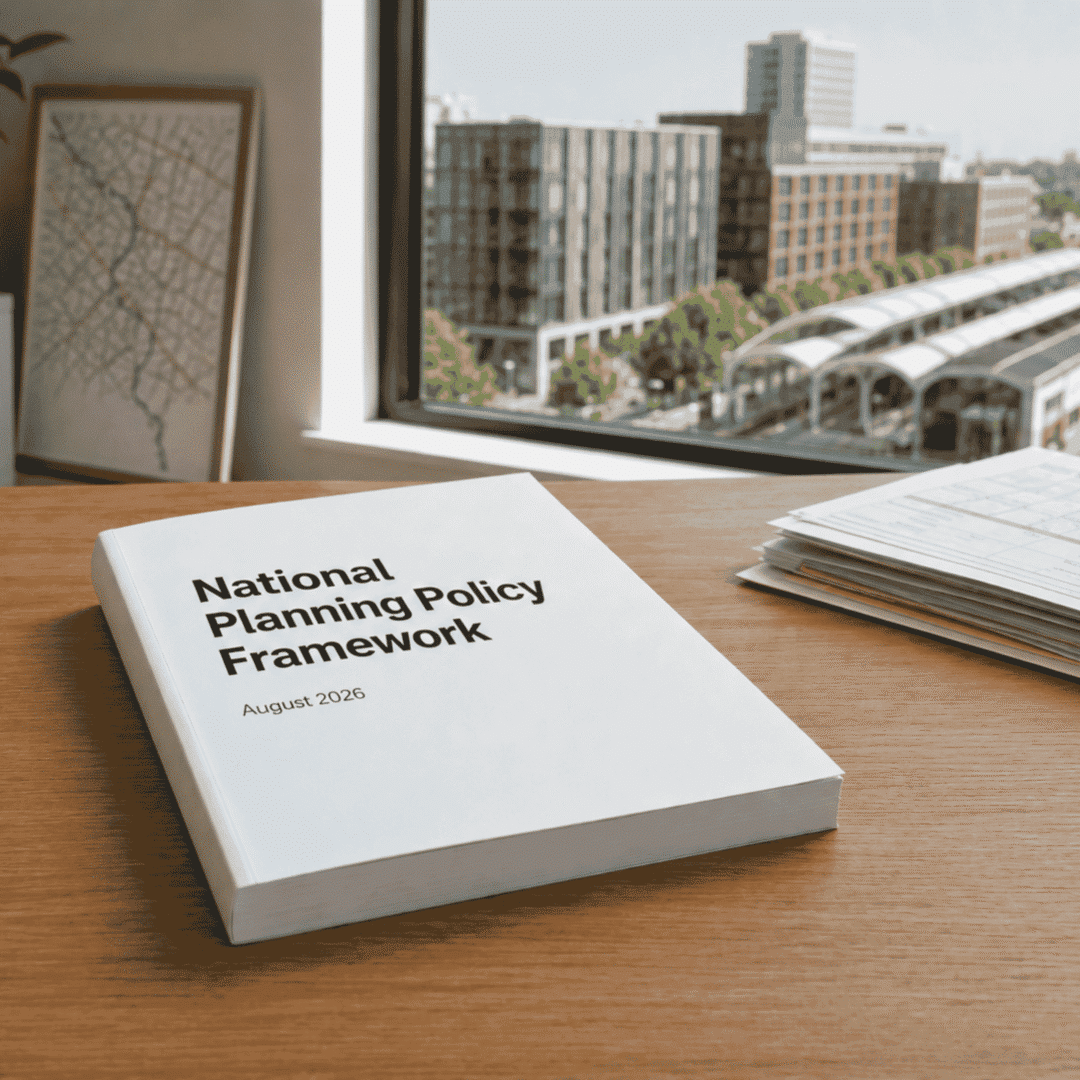


NPPF – All aboard for station development?
This morning we got a treat we weren’t expecting until September: the new NPPF has arrived. But what does it mean?
A brief recap; the latest iteration of the NPPF has been in the works for a while and was due to be published in July. It was put on hold to allow a review by the incoming Burnham Government, and perhaps, to give Burnham a couple of positive headlines during a slow summer week. The proposals contain new protections for pubs (leaked on Saturday) and a presumption in favour of development around stations. So far, so very politically easy – at least at national level.
However, as with all things planning, when policy gets translated into on the ground activity things can be more complicated. The proposals to increase development around stations are a prime example.
The new NPPF gives real weight to development within reasonable walking distance of railway stations where there is a good service (defined as two trains an hour in each direction during the “day time”). These stations are normally to be found on the fringes of the bigger conurbations, and are quite often in areas which are currently administered by the Liberal Democrats, Conservatives or by authorities in No Overall Control. These are often also the areas with some of the highest housing need and targets. Residents in these areas, where they may already be a lot of housebuilding, often feel under pressure from development and a sense that infrastructure, including rail, is already at capacity.
So we expect to continue to see concerns raised about local infrastructure and we have already been told by at least one authority that train station or no train station, that a specific site will not get through the Planning Committee. That may be done via other issues – impact on the road network or BNG – or it may be through a ruthlessly thorough application of the density rules contained in the station first policy.
For us at Cratus, this, like many issues, is a communication issue. Talk first, engage seriously, and work with the politicians and community and more can be achieved, more flexibility and a better reputation, and of course, your train may arrive on time. And of course, no need to pay a barrister for the appeal.