

Reform UK conference: bigger, better organised, but still politically headwinds are blowing
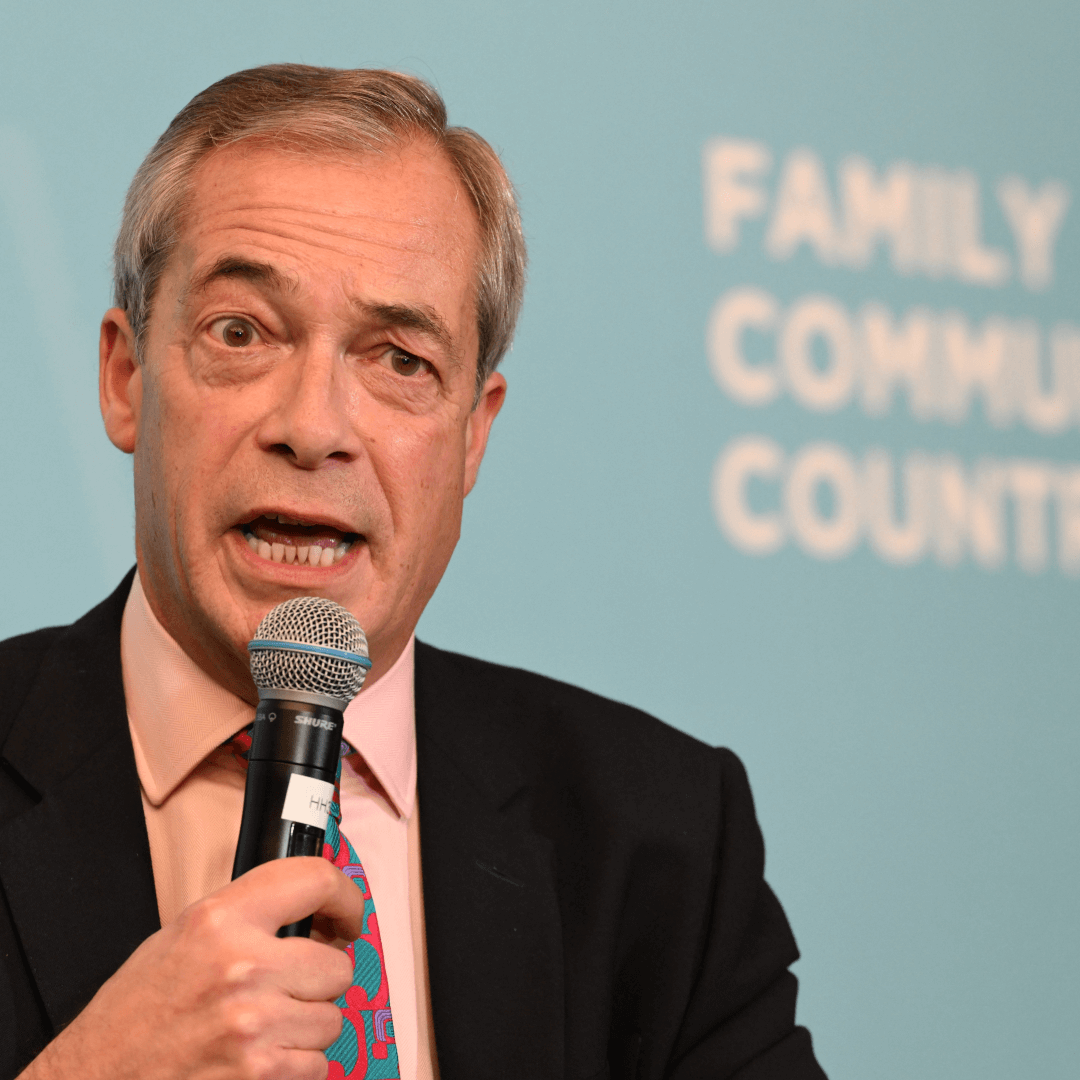
Last Friday and Saturday I attended the Reform UK conference at the NEC in Birmingham. It was my second year attending and it was striking that the party had a taken a significant step forward in regards to their conference.
The conference was much larger than last year. There were more commercial sponsors in the exhibition hall, more people moving between sessions, and better facilities for attendees. The simple things matter. More food and drink options, more places to sit and more evidence of a professional conference operation all suggested that Reform UK is learning how to put on a national political event at scale.
That said, it was not all smooth. On Friday morning the queue for passes was long enough for some attendees to be waiting for well over an hour just to collect their passes which surely should have been posted out beforehand. That might sound like a minor organisational gripe, but when attendees have forked out good money to attend they’re effectively paying to stand in a queue.
The venue also matters. The NEC is a good home for trade shows and exhibitions. It is a less natural home for a political party conference. Compared with the venues used by Labour and the Conservatives, it lacks some of the informal spaces, easy fringe movement and atmosphere that make conference week work. It’s also a long way from the city centre and lacks the quantity of convenient hotels within walking distance.
The politics still feel narrow
That organisational progress then leads to the more interesting political question. Reform UK is clearly growing as an operation. But is it growing as a political party capable of sustaining the pressure that comes with success?
On that, I am less sure. The pool of political talent still feels narrow. A small group of recognisable figures, including Nigel Farage, Richard Tice, Lee Anderson and Robert Jenrick, were being pulled between a large number of events.
There was also an unusual dependence on councillors to sit on panels. Councillors are important political actors and often bring more practical experience than Westminster politicians. But at Labour or Conservative conference, councillors are usually part of a much wider gathering of the party faithful and other attendees. At Reform’s conference, they were doing a lot of the heavy lifting.
You wouldn’t see this at the Labour, Conservative or Liberal Democrat conference and served to remind attendees that the pool of political talent remains narrow in the party.
Policy depth remains the weakness
The shallowness of the policy offer was also clear. There were not a large range of policy areas being discussed and even where very senior representatives were speaking on panels or taking questions they were very frequently pivoting away from the substance of the matter being discussed to talk about different issues. The best example I saw was during a Q&A with Richard Tice and Lee Anderson, compered by Jeremy Kyle. It was energetic, well attended and very much in tune with the mood of the conference. Party members were asking questions and Kyle was on typically ebullient form which went down well. But when the questions turned to policy, there was often only a small amount that the two Reform MPs could say.
One moment stayed with me. Lee Anderson was asked by a victim of the grooming gangs about perpetrators who had been released after serving only half their sentence. Her story about having to move house for her own safety was incredibly powerful. Anderson’s answer was: (under Reform), “they would still be in prison. It’s as simple as that.”
Except, of course, it is not as simple as that. Sentencing, prison capacity, court backlogs, probation, rehabilitation and public protection are all policy areas that are more complex than that Anderson’s answer, while well meaning, showed no appreciation of the choices, money, trade-offs and delivery plans required to tackle the issues the questioner was asking about. It served to show that the will to make a difference might be there but the answers are nowhere near fully formed.
Exceptions to this include the developing policy announcements on housing and the economy made by Richard Tice and Robert Jenrick which show some progress but nowhere near enough for a fully formed manifesto.
The faithful are not deterred
The conference also took place against the backdrop of the Channel 4 documentary about donations and the suspension of James Orr and Dan Jukes. Outside the conference this was the story that was making the running outside the conference hall and it clearly derailed the media plan. Inside the conference hall however, the impact, as is so often the case, was not the same.
The party faithful are not deterred. Many believed it was just a stitch-up while others saw it as a case of youthful naivety rather than something that should change their view of the party. Above all, they remain fired up and devoted to Nigel Farage.
That devotion will continue to serve Farage well in keeping his fans motivated to continue with their support. But this sort of controversy, and Farage’s reaction to it also makes it harder for Reform to broaden its appeal. The party can rally its core vote against the media and the establishment. The harder task is persuading sceptical voters that it is ready for responsibility.
The anti-Reform vote is hardening
The bigger strategic threat to Reform UK is not one documentary, one row or one difficult news cycle. It is that the anti-Reform vote is hardening and becoming better organised.
Voters who want to stop Reform are becoming more sophisticated about how they use their vote. They are increasingly willing to work out which candidate is best placed to beat Reform and cast their vote based on that calculation. This tactical voting has already cost Reform some election victories and is the principle reason that their success in by-elections has hit the buffers over the past twelve months.
At the moment, Reform does not appear to have a serious answer to this challenge. It is still very good at enthusing the 20% or so of the population who are on board. But reaching the next 10-20% voters who should be ‘Reform curious’ isn’t happening at the moment. More ‘scandals’ and poorly judged responses will not help with this.
A bigger show, but a harder road
This year’s conference was a clear step forward for Reform UK in terms of putting on a show. It was bigger, more commercial and, despite some hiccups, better organised than last year. The party looks more serious as an operation than it did twelve months ago.
But the political climate is becoming more challenging. The party’s internal discipline, policy depth and ability to broaden beyond the Farage faithful are now being tested. The audience at the conference is bigger, but so is the scrutiny.
With the news on Monday that the district and borough elections scheduled for next May will now go ahead following the pause in the local government reorganisation programme, Reform UK will have another major opportunity to grow its local government base. If it does, there will be even more Reform UK politicians in attendance at the conference in 2027.
So the road ahead is harder than it looked a few months ago. But there is fight left in this dog yet.