Taking people with us on the development journey
Reflections from our Manchester roundtable with Town Legal
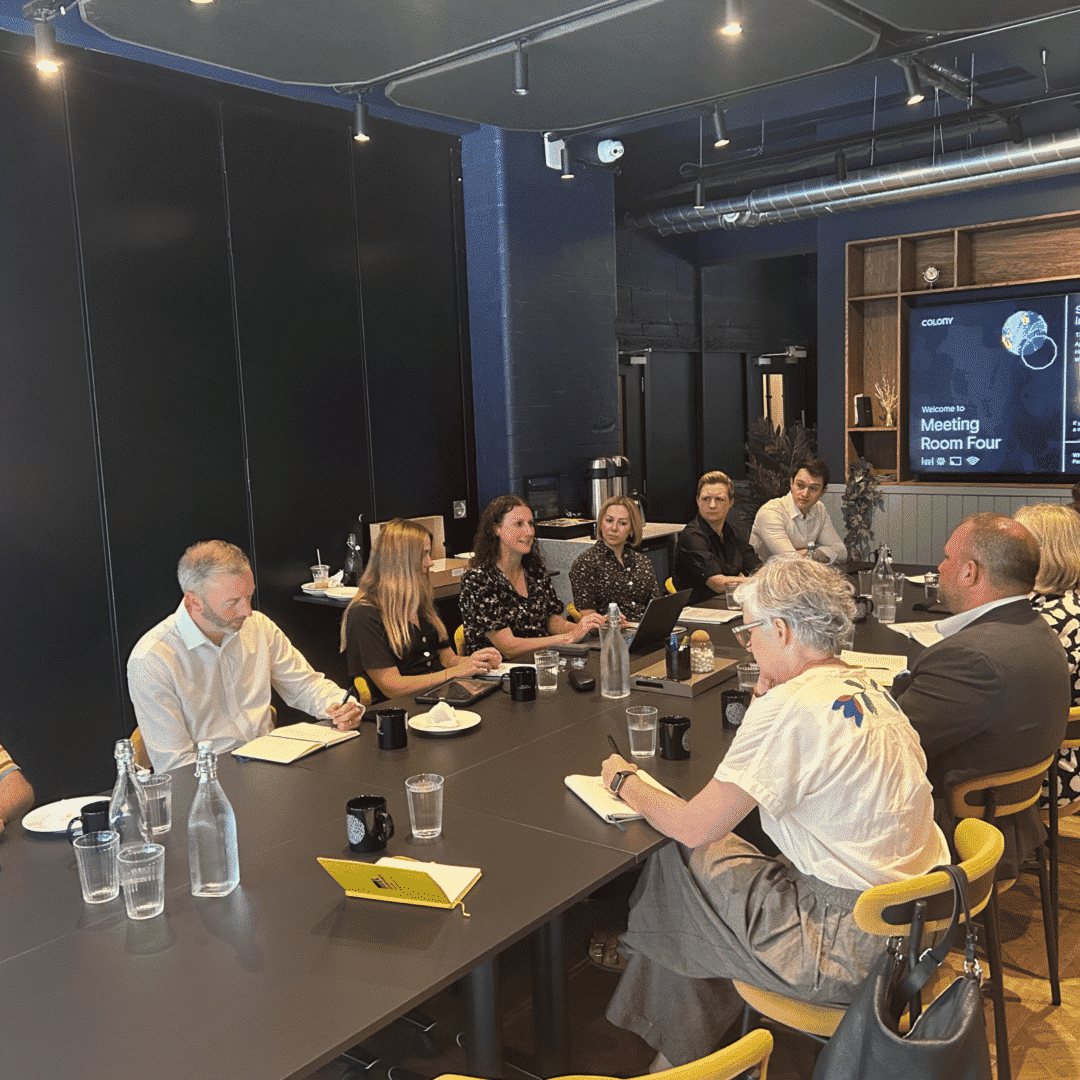
In June, Cratus Group joined Town Legal in Manchester to bring together politicians, planners, developers and advisers around a deceptively simple question: how do we take communities and politicians with us when delivering new homes and regeneration?
Held at the height of one of the most stifling heatwaves of 2026 we lapped up the air conditioning and had a brilliant conversation with a great range of contributors.
The discussion was timely. Nationally, the ambition to build more homes is clear. Locally, however, every proposal lands in a real place, with its own identity, pressures and history. Success therefore depends on more than a strong planning case. It depends on trust, leadership and a convincing account of how change will improve people’s lives.
Leadership matters
Cllr Tom F. Robinson made a characteristically thoughtful contribution from the perspective of Manchester City Council. His central message was that elected members cannot be treated as an audience to brief at the end of a process. They need to understand the case for change, the benefits for their communities and the choices involved early enough to help shape the journey.
That requires political courage, but it also requires developers to do their part. By the time an application reaches committee, it is too late to discover that key relationships have not been built or that understandable local concerns have gone unanswered. Councils can play a powerful convening role, bringing people together and helping proposals respond to the place they are intended to serve.
Build communities, not just homes
The insights shared by Focaldata brought useful evidence to the conversation. Their research shows that relatively few people see a shortage of supply as the principal cause of the housing crisis. Even where the link between supply and prices is accepted, that does not automatically translate into support for development nearby.
The more persuasive case is about building communities: homes accompanied by the infrastructure people need, places with a clear identity and genuinely affordable options. The economic argument still matters, especially to younger people trying to access a home, but it must be connected to tangible local benefits.
Engagement must shape the outcome
The sector representatives around the table added practical experience from across planning, development, design and community engagement. A consistent theme was that engagement cannot be a communications exercise carried out after the important decisions have already been made. It has to influence the proposal itself.
That means listening early, being honest about constraints and demonstrating where feedback has changed the scheme. It also means recognising that communities are not a single voice. The loudest objection is not necessarily representative of the whole place, particularly when younger residents, those in temporary accommodation and people who may benefit from new homes are often less visible in formal planning processes.
A shared responsibility
There was no suggestion around the table that taking people with us is easy. Social media can amplify misinformation at speed. Local planning teams are stretched. Multi-party politics means support must often be built across a wider range of perspectives. And elected members know that backing change can carry personal political risk.
But the answer cannot be to retreat from the conversation. Developers, councils and advisers share responsibility for making the case, responding to legitimate concerns and creating places that people can see themselves in. Strong local authority leadership and well-resourced planning teams are vital, as are developers willing to invest in relationships long before a committee date appears in the diary.
My thanks to Town Legal for partnering with us, to Cllr Tom F. Robinson and Focaldata for framing the political and public dimensions so clearly, and to every sector representative who contributed so openly. The practical lesson from Manchester is clear: if we want to deliver development and regeneration at the pace the country needs, building public confidence is not an optional extra. It is part of the job.
At Cratus, we help organisations build the political and community partnerships needed to turn good proposals into deliverable places. If you are planning a major development or regeneration programme, I would welcome a conversation about how to bring people with you from the outset.
Want to explore this further? Download our Communities Report for more insights into building trust, engaging communities and securing support for development.
Download the report here: Communities Roundtable Insights – Cratus Group