
Beyond the Headlines: What the Great British Public taught me this Summer
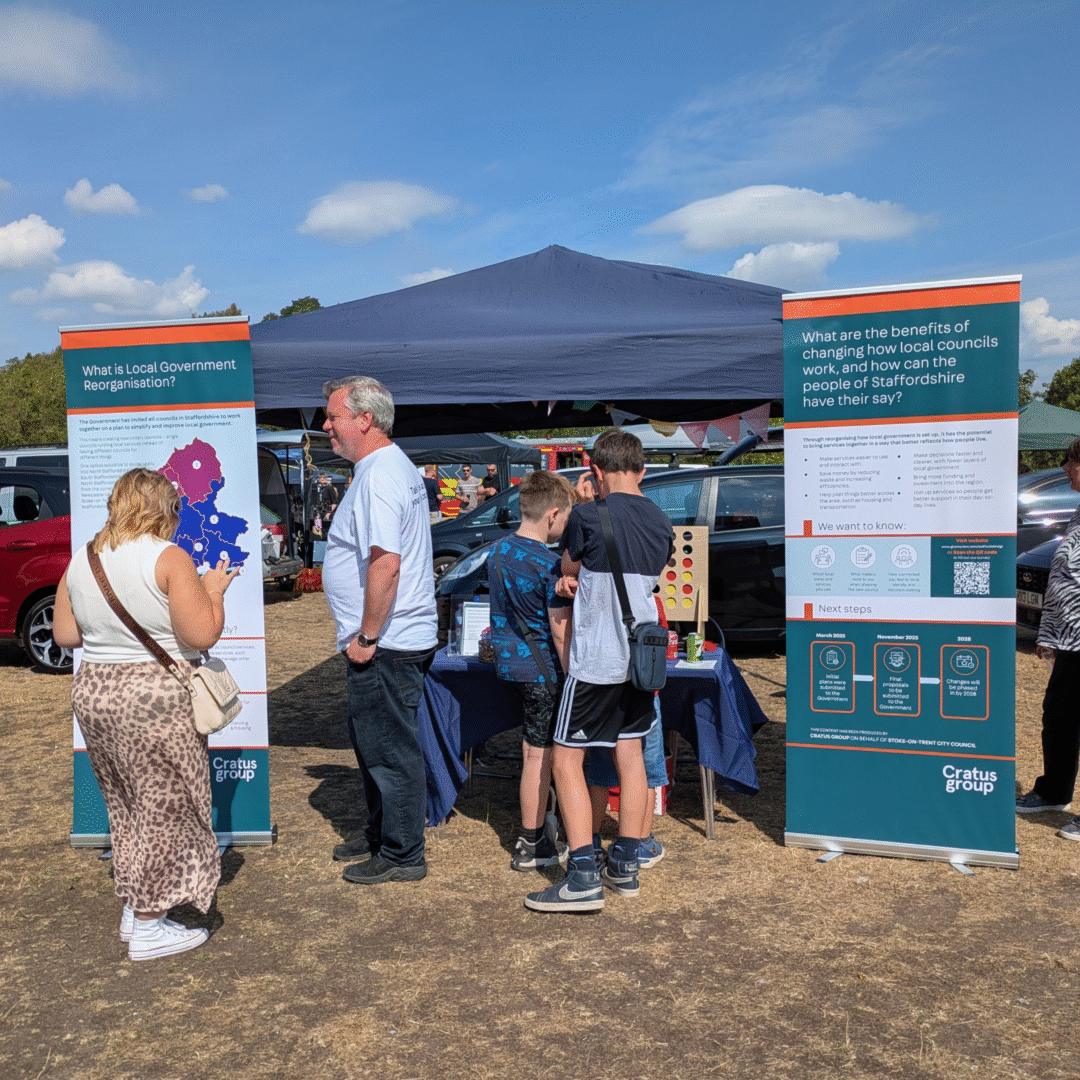
This summer, my colleagues and I have been out in communities across several regions of England, engaging with the public on local government reform. We haven’t been in stuffy consultation halls; instead, we’ve set up pop-up stalls at summer fetes, on bustling high streets, and at local community events. Our strategy was simple: go to where people already gather. This approach, combined with sifting through over 3,000 digital survey comments, has given me an incredibly rich, unfiltered insight into what’s truly on the minds of the UK public.
What became strikingly clear is that people have virtually no interest in the mechanics of local government reform itself. They don’t care who collects the bins, as long as they are collected. For most, the intricacies of council mergers or new governance structures fade into insignificance compared to the tangible reality of their daily lives.
The Power of the “Little Things”
It’s amazing how often what seem like “little things”—potholes, litter, the state of high streets, or the efficiency of recycling centres—emerged as key concerns. These issues, far more than complex policy matters like council housing, resonate deeply. They speak to a broader feeling that their area is in decline, a sense that everything is a bit shabby and nothing works. This visible lack of investment seems to echo their own tighter household budgets, creating a kind of national malaise where public neglect mirrors personal financial strain.
This feeling of decline fuels a profound scepticism towards new development. People want money spent on improving what already exists, not on new buildings. This presents a core dilemma: it’s new developments that generate the income and profit necessary for investment, while simply fixing existing infrastructure is a cost to landowners with no direct return. The public, understandably, doesn’t always grasp the intricacies of council funding, often asking why councils could build homes and keep areas clean in the 1950s and 60s, but struggle to do so now, unaware of the drastic cuts to local government funding post-2008.
The Roar of Anger and the Echo of National Narratives
Underneath these frustrations, I also encountered a noticeable undercurrent of anger. This anger isn’t just about poor services; it’s a potent mix of general frustration and, sometimes, a channeling of national narratives that have little to do with local councils. A striking example was how frequently discussions would pivot to immigration. I heard comments echoing national political messages, such as “Deliveroo drivers are illegal immigrants” (even though this is not factual), or concerns about hotels being used for “immigrants” (referring to asylum seekers, but without differentiation).
These discussions, while often misinformed or misdirected, reveal a deeper sense of grievance. People are tapping into broader anxieties, using local consultations as a “dumping ground” for frustrations that may stem from a feeling of being unheard or powerless. This makes it incredibly challenging for councils and public sector bodies to steer conversations back to factual, locally relevant issues. Trying to counter these deeply held, often emotionally charged, national narratives with dry facts can be incredibly difficult.
The Human Heart of Housing
Amidst these widespread sentiments, a conversation with several homeless men in one particular city offered a profoundly impactful counterpoint. Attracted to our stall by my dog, who they gleefully fussed for the best part of 30 minutes, they shared their desperate need for housing and their frustration that “no one cares.” This starkly reminded me that we aren’t just building “units”; every home we build should end up with a person or family living there. It brought a critical human element to the policy discussions, highlighting the most acute form of housing need.
The Lesson for Public Consultation
So, what’s the most important lesson from this summer’s engagements for anyone involved in public consultation for planning and development in the UK?
It’s this: we must radically rethink how we engage with communities.
The public’s focus is on the immediate, tangible aspects of their daily lives and the visible state of their communities. Their trust is low, their anger is palpable, and they are susceptible to national narratives, even if those are inaccurate or irrelevant to local issues.
Therefore, developers and councils must be willing to share the profits they make with communities by directly investing into the things that people truly care about. This means putting resources into highly visible improvements: fixing potholes, revitalising empty shops, funding street cleaning, and enhancing green spaces. It’s about demonstrating, in concrete terms, that new development will genuinely lead to the improvements residents actually want to see, rather than just abstract promises of future prosperity. We need to bridge the gap between development economics and lived experience, showing that the “big things” of growth can directly fund the “little things” that make a huge difference to people’s sense of their community and their quality of life.