
Devolution Diaries: Surrey Revisited
Who should government listen to when planning Surrey’s future?
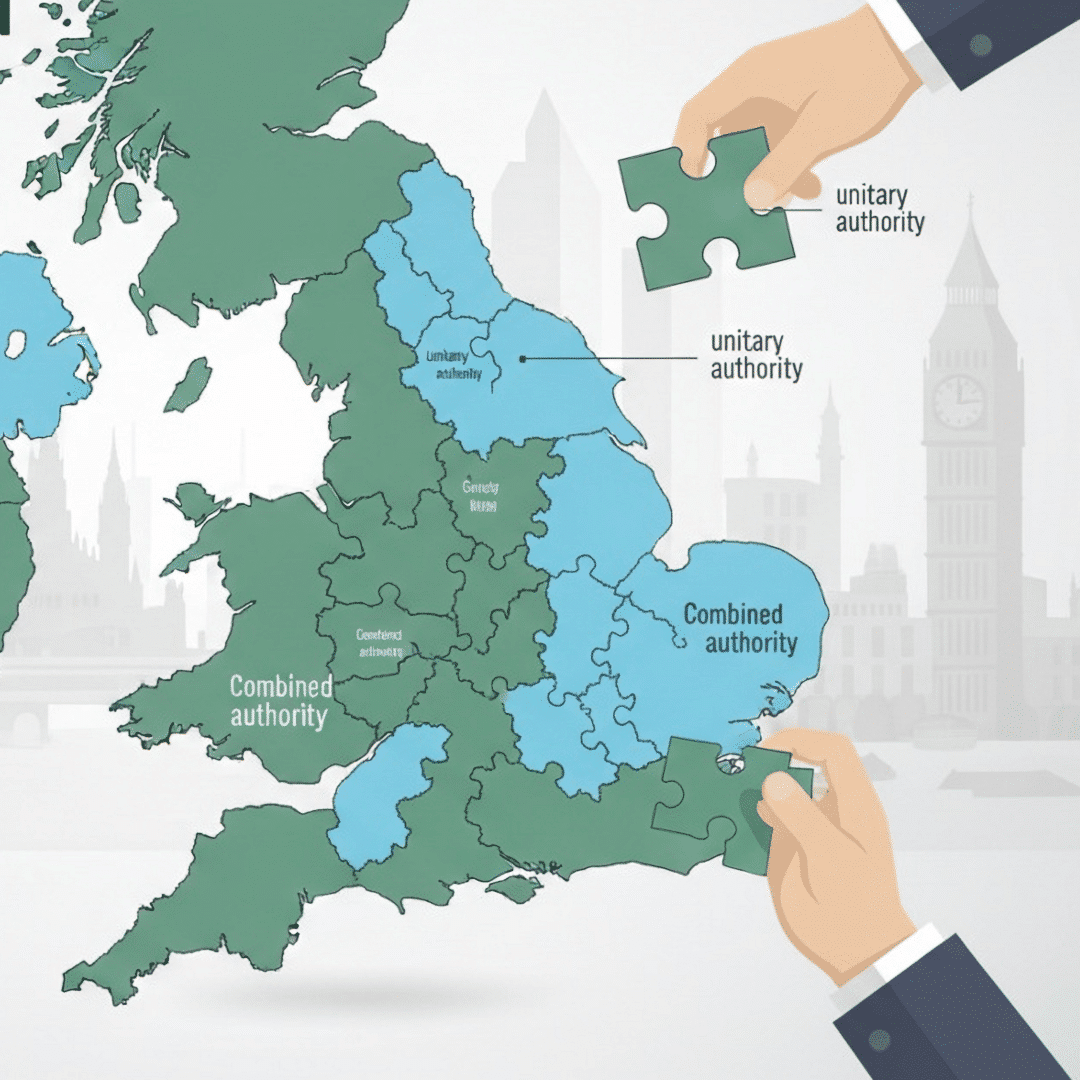
This week’s Devolution Diaries revisits Surrey given the deadline has now passed for local authorities to submit their final proposals to Whitehall. As Sydney unpacked in April’s Devolution Diaries, the future of local government in Surrey remains unwritten. Crucially, Surrey looks set to be the first real test for the government as it tries to successfully navigate differences between two competing proposals for Local Government Reorganisation across the county.
Surrey County Council’s proposals of creating two new unitary authorities, one in the east and another in the west, has the support of Elmbridge Borough Council and Mole Valley District Council. Proponents argue that this proposal best addresses the criteria set out by government whilst bringing the greatest benefit when it comes to savings, efficiencies and streamlined services, which re-organisation is said to herald. Leader of Surrey County Council, Cllr Tim Oliver, said last week on BBC Radio Surrey (from 03:12:00) that “I think from a residents perspective, what unitaries will do is provide stronger, simpler and, I hope, more cost effective, more efficient councils.”

Realistically, from the government’s perspective the two-authority model is the most efficient and would empower these two new authorities to benefit from economies of scale. Which is a key benefit given the state of local government finances. Analysis by proponents of the three-authority model concede that having two-unitary authorities hands residents a significant saving. Over the first four years of operation, a two-unitary model will have saved £86.1m in costs vs £62.3m if Surrey opted for a three-unitary approach. At a time when residents and Council leaders are acutely conscious of how to fund support for children who have special educational needs and disabilities (SEND), these savings are significant.
However, politically there are challenges, and the government should be aware of the role local MPs might play in either assuaging residents or rallying behind certain groups who have vocally opposed the suspension of elections and Surrey County Council’s proposals. MPs like Surrey Heath’s Dr Al Pinkerton have asked questions in Parliament about how MPs can support collaboration with Surrey County Council in the context of local government reorganisation in Surrey. Whilst the government has said that they remain committed to updating Parliament on the progress of local government reorganisation, it is the communication with residents and local groups which may prove to be of greater political importance if communities are to get behind the government’s vision of Local Government Reorganisation in England.
In last week’s interview on BBC Radio Surrey, Cllr Tim Oliver (Leader of Surrey County Council) said he was surprised to see Crawley Borough Council and Reigate & Banstead Borough Council’s joint proposal for a new unitary authority. Saying, “it came out of the left field”, given that Reigate & Banstead Borough Council are also supporting the alternative proposal favoured by nine of Surrey’s District Councils for a three unitary authority model. Tandridge District Council, themselves favouring the three unitary authority model, voted this month to reject a similar merger Crawley Borough Council.
The government is expected to make a decision on the proposals it has received by the winter, but in that time they’ll be ensuing debates about the future governance of Surrey and how to strike the balance between savings, improved services and fostering a sense of local connection within these proposed new unitary authorities.
Cratus’ Devolution Diaries will continue to reflect and provide insights about Local Government Reorganisation and the Devolution agenda. In the meantime, get in touch if we can help you and your business navigate the changes.