
Devolution Diaries: Will the Government Make Oxford Greater?
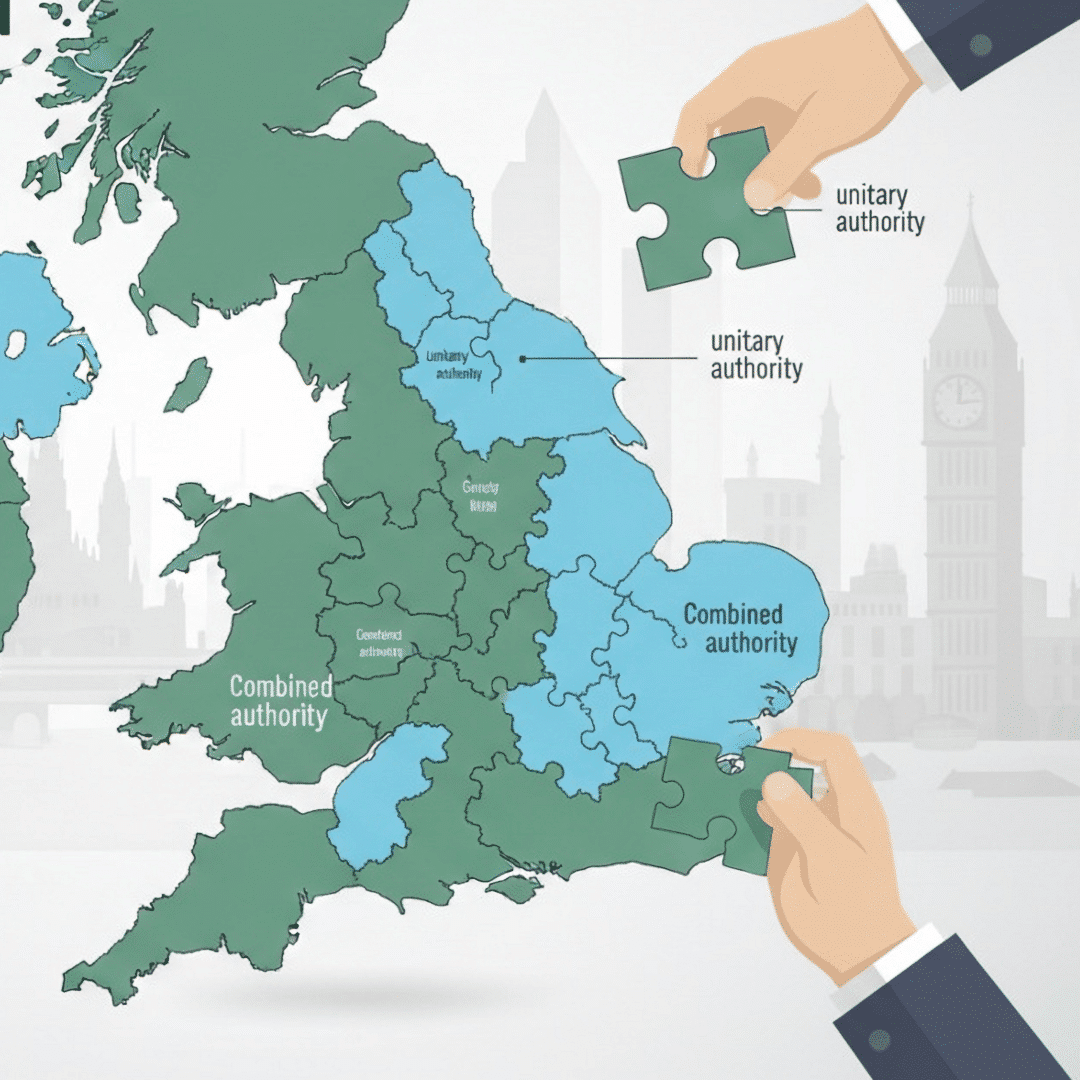
As the UK Government’s reorganisation of English local government continues at pace, attention is increasingly drawn as to how those counties which did not make the initial first tranche will be reassembled.
In many cases, these counties were not included as geographically and in some cases politically the redrawing of their respective local government boundaries was not without controversy. One such example is the county of Oxfordshire, where the potential reorganisation of local government is not a new phenomenon. Indeed as far back as 2016 the then leaders of the five Oxfordshire district authorities proposed the abolition of Oxfordshire County Council and the creation of four new unitary authorities extending into Gloucestershire and Northamptonshire which was met with forceful resistance from the then Conservative-controlled Oxfordshire County Council. In the intervening years, various attempts to reconfigure the landscape of local government in Oxfordshire have been made without success.
Fast-forwarding to 2025, we now have a Labour Government firmly committed to the unitarisation of local government and a transformed electoral landscape with Liberal Democrat leaders of all four Oxfordshire district council along with Oxfordshire County Council and the Conservatives relegated to borderline irrelevance both locally and nationally. The collapse of the Conservatives has resulted in a dynamic where in much of Oxfordshire the competition is now between the Liberal Democrats and Labour and accordingly relationships between the parties have become somewhat frayed as demonstrated by Labour withdrawing from the then coalition running the County Council in September 2023. The one relative constant during this period has been the Labour-led Oxford City Council which has consistently had a challenging relationship with the surrounding district authorities which the City Council has sought collaboration with to address Oxford’s unmet housing need.
Aside from the pure politics, the geography of Oxfordshire does not easily lend itself to a significant redrawing of the boundaries. If the Government is going to stick to its notion that the new unitary authorities should roughly have around 500,000 residents, then logically the county is too small for three unitaries. However, a single Oxfordshire unitary (similar to neighbouring Buckinghamshire) has been consistently resisted by all district authorities and a donut-shaped enlarged City unitary surrounded by a disparate “Oxfordshire without Oxford” unitary has obvious drawbacks. So what are the potential solutions?
On 4 June, Cllr Susan Brown (the Labour Leader of Oxford City Council) announced the City Council’s proposals for local government reorganisation. These proposals would see the establishment of a new Greater Oxford unitary authority which in the City Council’s own words would “cover Oxford and its Green Belt”. The remainder of the County would be split into a new Ridgeway Council covering the non-Green Belt areas of South Oxfordshire and the Vale of White Horse and the existing West Berkshire authority and a North Oxfordshire Council which would include the parts of the existing Cherwell and West Oxfordshire authorities which lie outside the Green Belt. Having the relatively pro-development Oxford City Council in charge of the Oxfordshire Green Belt would certainly have its attractions for many in the built environment community looking to capitalise on a more liberalised Planning regime. Furthermore, one would imagine these proposals would find favour with a Labour Government which has identified Oxford as a key driver of economic growth in the coming decades.
Perhaps unsurprisingly, this Greater Oxford vision is not shared by all local politicians. The four Liberal Democrat leaders of Cherwell, South Oxfordshire, Vale of White Horse and West Oxfordshire have produced proposals for two unitary authorities – an Oxford & Shires Council which would see Oxford City merged with Cherwell and West Oxfordshire and a Ridgeway Council which would result in the entirety of South Oxfordshire and Vale of White Horse joined with West Berkshire. Note in this instance, there would be no special treatment for the Oxfordshire Green Belt. To complicate the matter even further, the Liberal Democrat-led Oxfordshire County Council has proposed a single Oxfordshire unitary authority.
At this stage, this poses more questions than answers. One, two or three new unitaries? A Greater Oxford or a City merged with its surrounding Districts? How these boundaries are finally drawn will emerge in the coming months. What is clear is that as with all of the other areas subject to local government reorganisation, where the lines are drawn will have a significant impact on the future of the electoral and development landscape in these areas for generations to come.
Cratus has a strong track record of working on projects across Oxfordshire and would be delighted to discuss future projects.