
What an Andy Burnham Premiership Could Mean for Planning and the Built Environment
With Andy Burnham now returned to Westminster as MP for Makerfield following a decisive by-election win that strengthened Labour’s hold in the constituency, attention is now increasingly turning to what a future Burnham premiership will mean for Planning and the Built Environment. This follows the resignation of Keir Starmer less than two years on from winning a landslide General Election victory for Labour in 2024, meaning we now face our seventh Prime Minister in ten years.
Burnham’s political identity has been shaped across multiple roles including as a junior minister and later Secretary of State for Health and Culture, Media and Sport and Chief Secretary to the Treasury under Gordon Brown, two unsuccessful Labour leadership bids in 2010 and 2015, and his time in the Shadow Cabinet under Jeremy Corbyn (during which time he stated he was not the type to launch coups against party leaders!). However, it is his mayoralty in Greater Manchester and his articulation of “Manchesterism” that most clearly signals how he might look to govern nationally.
At its core, Burnham’s agenda would likely be defined by a shift towards place-based growth, and a more strategic planning system. Housing delivery would likely sit at the centre of this. Rather than treating housing as a market-led outcome, a Burnham-led government would likely position it as a core national priority, comparable to transport or energy.
Expect efforts to oversee a major expansion of council housing delivery, potentially through redirecting a significant portion of the Affordable Homes Programme funding, rather than broader affordable tenures. This would likely be accompanied by a renewed role for the state in housebuilding, potentially through expanded local authority housebuilding capacity.
Alongside this, policy intervention in the existing housing system would likely intensify. Burnham has long been critical of the Right to Buy, linking it directly to the long-term erosion of council housing stock. A future Government could therefore seek to either significantly reform or fully suspend the policy. Stronger compulsory purchase order (CPO) powers for local authorities are also likely, enabling faster land assembly and unlocking stalled sites.
In the private rented sector, Burnham’s Greater Manchester track record with the Greater Manchester Good Landlord Charter suggests a willingness to intervene more directly. Before Labour’s election victory in 2024, he was also publicly advocating for a number of measures that were included in the subsequent Renter’s Rights Act.
Planning reform under a Burnham premiership would likely be characterised by a shift towards strategic spatial planning at scale. The approach seen in the Places for Everyone framework within Greater Manchester Combined Authority offers a template of aligning housing, employment and infrastructure across multiple authorities to support coordinated growth. This model prioritises brownfield regeneration and urban density, while also acknowledging that selective Green Belt release is necessary to meet housing need.
Policy around the development of the Green Belt policy will remain politically sensitive under a Burnham premiership. Soon after taking office, he ordered a re-writing of the Greater Manchester Spatial Framework to reduce Green Belt release. A Burnham-led agenda could therefore place greater emphasis on town centre development and re-using brownfield sites as a priority, viewing town and city-centre regeneration as a catalyst for growth.
Institutionally, development corporations could become a central delivery mechanism. Building on models such as the Old Trafford Regeneration Mayoral Development Corporation, Burnham could expand the use of these bodies across England to accelerate regeneration, streamline planning, and leverage public land. This would represent a shift towards more delivery-focused planning structures sitting alongside local planning authorities. There is a suggestion that Government borrowing could increase, within the fiscal rules, to fund specific projects which could include Mayoral Development Corporations.
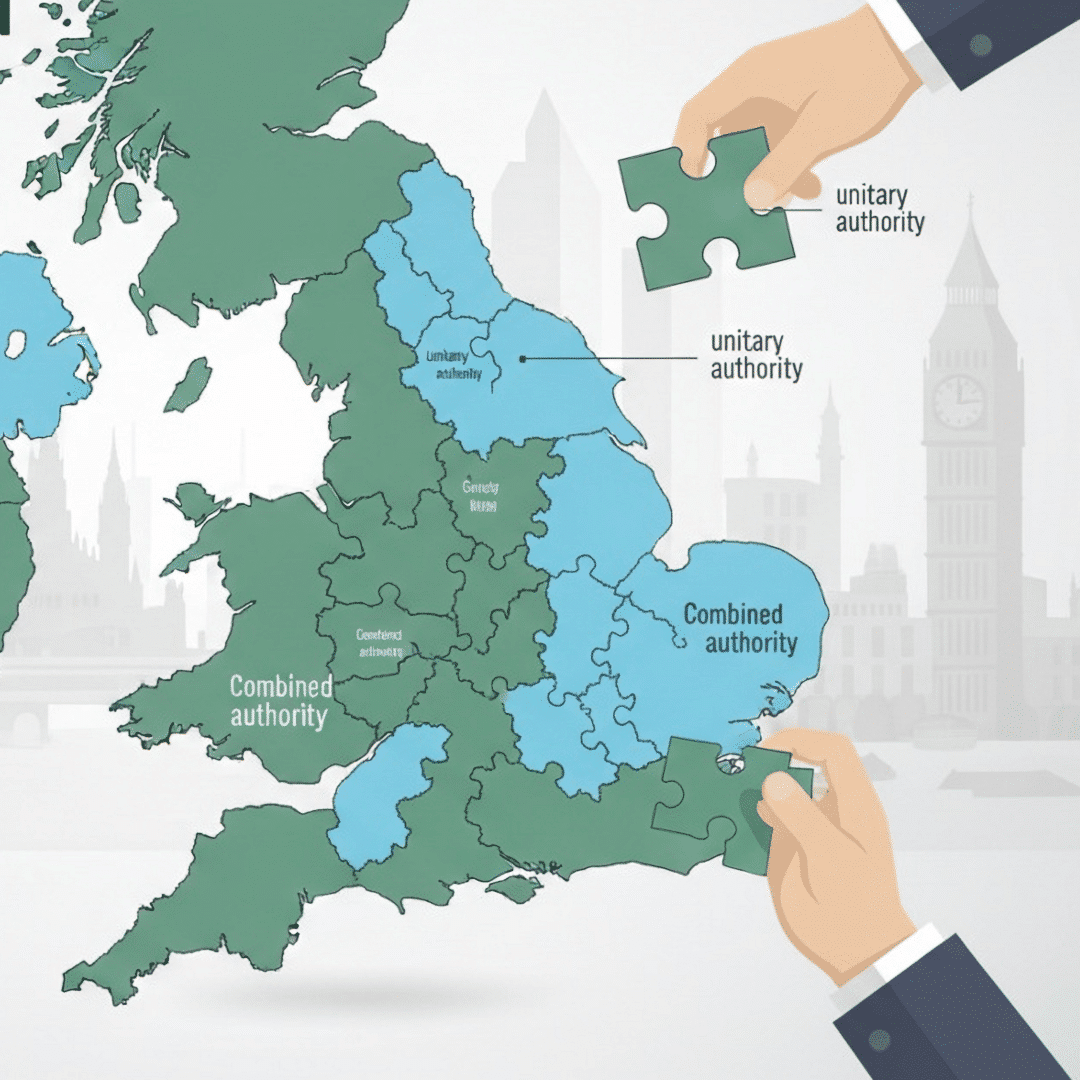
Devolution could be another defining pillar and a key part of the first 100 days. Burnham has consistently advocated for the transfer of powers from Westminster to mayors and combined authorities, including more control over transport, housing, skills, and infrastructure investment. A Burnham premiership could significantly accelerate “universal mayoral coverage” across England, with enhanced fiscal autonomy – potentially including greater control over business rates and infrastructure funding decisions. Although, this is not a certainty as there will be concerns over the prospect of creating more Reform Mayors hence the postponement of the 2026 Mayoral elections.
Burnham has been a vocal advocate for improved northern connectivity and may seek to revisit elements of HS2’s original northern ambition, alongside greater investment in integrated public transport systems modelled on Greater Manchester’s Bee Network.
Underpinning all of this is Burnham’s broader critique of Westminster. His “Manchesterism” frames the past four decades as a period of declining trust in politics, driven by the Labour Party’s detachment from working-class communities and regional economies. His response is a more interventionist state, but one that operates through empowered local institutions rather than centralised Whitehall control.
Taken together, a Burnham premiership could be significant for the Planning system and present opportunities for the built environment sector.
If you would like to discuss what this means for your business, please get in touch!